
Utility Bills Shock Customers as Gas Prices Surge; States Including New York and Georgia Offer Rebate Checks and Credits
By SalaryFor.com – real salaries for all professions
This winter, households across the United States are confronting much higher natural gas utility bills — in some cases nearly doubling compared with the same period last year — as extreme cold, volatile market prices and higher transportation costs squeeze both customers and utility providers. In response, states such as New York and Georgia are rolling out or considering rebate checks, bill credits and other assistance programs to help soften the blow.
Bills Rising Sharply in Many Areas
Across colder parts of the country, residents are reporting steep increases in monthly gas and heating bills compared with last winter. In upstate New York and other Northeastern communities, bitter cold has driven up both usage and supply costs, sending utility bills higher than many households expected. Anecdotal reports from customers nationwide suggest some families are paying twice as much this year for natural gas compared with last winter’s bills — even when usage hasn’t dramatically changed. Anecdotal social media accounts from homeowners across several states describe monthly natural gas charges rising from around $200 to $320 or more during the peak winter months — increases of more than 50 percent over last year.
In fact, sharper rate increases and broader patterns of utilities raising prices nationally — driven by inflationary fuel and delivery costs — have been documented as a widespread trend, affecting millions of energy consumers across dozens of states.
Experts note that while typical natural gas costs in some states have climbed only modestly on a price-per-therm basis, the usage effect from prolonged cold and higher baseline rates adds up in monthly statements, making bills feel much larger than last year’s. (U.S. Energy Information Administration data also show higher average residential gas prices in states such as Georgia and New York compared with recent years.)
New York: Rebate Checks and Legislative Action
In New York, state policymakers have taken active steps to provide financial relief this winter:
- Inflation Refund Checks: In late 2025, Gov. Kathy Hochul’s administration announced that inflation refund checks of up to $400 would be sent automatically to about 8.2 million New York households to help offset rising costs — including higher energy bills this winter. No application is required for most eligible residents.
- Legislative Proposals for Utility Rebates: New York Assembly Republicans have introduced a plan to redirect unused **green energy funds to provide **bill credits and $2 billion in direct rebates specifically aimed at helping lower- and middle-income households coping with soaring utility costs.
In addition to inflation checks and proposed rebates, the New York State Senate recently advanced legislation to expand regulator authority, require better notice to customers about rate hikes, and mandate utilities to return excess revenue to ratepayers — measures aimed at holding down utility costs over the long term.
Georgia: Credits, Assistance and Broader Relief
In Georgia, officials and utility regulators are also trying to ease the impact of higher energy bills:
- The Georgia Public Service Commission approved releasing $5 million in bill credits from the Universal Service Fund to help customers of Atlanta Gas Light, including targeted credits for eligible households.
- Georgia residents have also received surplus tax refund payments of up to $500, which, while not strictly energy rebates, provide additional disposable income that many families are using to help cover higher utility costs.
- Federal-state energy rebate programs — including Home Energy Rebates and efficiency upgrade incentives — are available to help lower future bills, even if they don’t provide direct monthly bill relief this winter.
What Customers Should Know
Consumers are urged to:
- Track their usage and compare bills year-over-year — delayed payment cycles can sometimes make seasonal comparisons confusing, but many are seeing clear evidence of significantly higher costs.
- Apply for assistance and rebate programs where required — some credits are automatic, while others (especially energy efficiency rebates) require applications and follow-through.
- Contact their utility or state energy office about affordable payment plans or low-income energy assistance programs.
While rebate checks and bill credits provide short-term relief, advocates stress that lasting solutions — including energy efficiency investments, updated rate structures, and stronger regulatory oversight — are needed to guard against recurring spikes in energy costs for consumers.
click here for more salary information
In: Business Stories · Tagged with: gas bill doubling, home utility costs increasing, rising energy costs
What Is ABF/U-Pack Moving Service?
By SalaryFor.com – real salaries for all professions
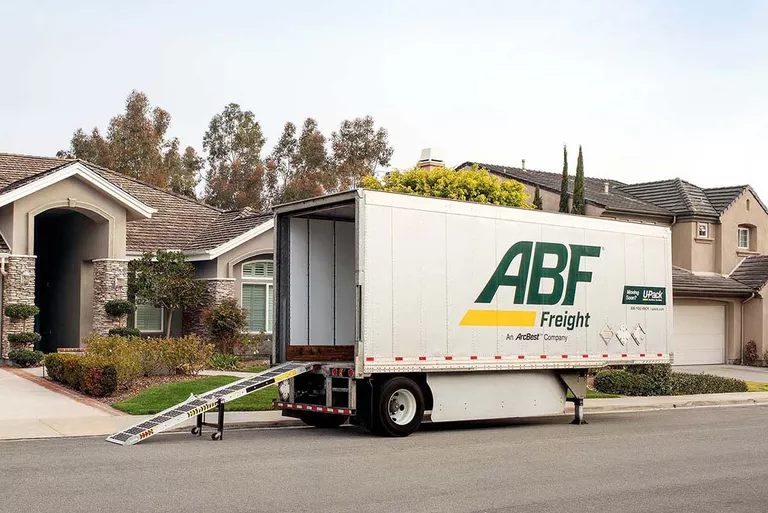
ABF/U-Pack is a freight-based moving service that combines professional transportation with DIY packing & loading (you load your stuff, U-Pack handles the transport). You don’t have to drive a big truck; instead, U-Pack delivers a moving trailer or ReloCube containers to your home, you load them, and ABF freight drives them to your destination.
U-Pack Equipment
U-Pack Trailer
U-Pack trailers (often ~28 ft) are dropped at your home and picked up once you’ve loaded them. They’re large — bigger than a typical rental truck — and you pay based on how much space you use.
ReloCube Moving Containers
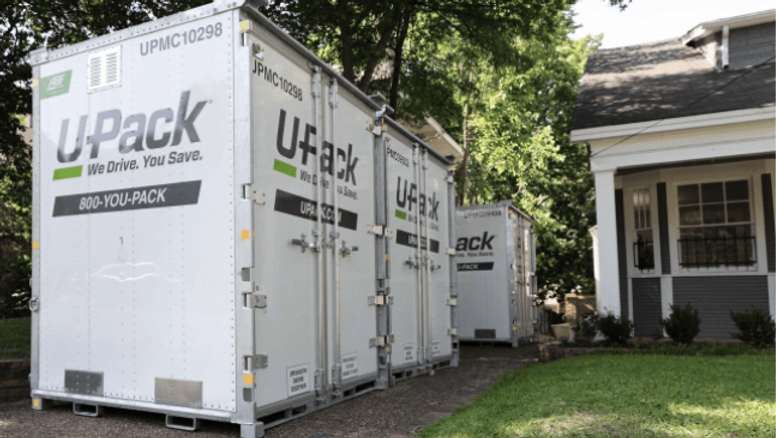
ReloCubes are weather-resistant moving containers (about 308 cu ft each); you can reserve multiple. You’re only charged for the cubes you actually use, not for those you reserve and don’t fill.
How the Service Works
- Reserve a Trailer or ReloCubes — U-Pack delivers them to you.
- Load Your Belongings — You pack and load (or hire local helpers).
- ABF Freight Transports — They drive your loaded equipment to your destination.
- Unload — You unpack when it arrives.
💡 U-Pack’s pricing includes equipment delivery, transport, and basic liability coverage — and you only pay for the space you use.
Estimated Costs for a Short Move (~50–100 Miles)
U-Pack doesn’t generally quote purely local moves under ~50 miles, so we use ~100 miles as the closest realistic example you can get a U-Pack quote for:
Transport Only
| Home Size | Equipment | Approx. Cost* | Trailer/Container Count |
|---|---|---|---|
| 1-Bedroom | ReloCube or trailer portion | ~$900–$1,100 | 1 cube or part of trailer |
| 2-Bedroom | Trailer space or 2–3 ReloCubes | ~$1,100–$1,500 | Trailer or multiple cubes |
| 3-Bedroom | 1 full trailer | ~$1,300–$1,700 | 1 trailer |
| 4-Bedroom+ | Trailer (more space) | ~$1,700–$2,200 | 1 trailer |
*Transport cost only — your actual moving cost will depend on exact route, timing, and space used.
Packing & Loading Helpers (Optional)
U-Pack does not include packing/loading labor — these are third-party charges:
- Packing help: ~$300–$2,000+ (size and local rates vary)
- Loading/unloading helpers: ~$400–$1,200+
📌 For a 3-bedroom move this could add ~$1,000–$3,000+ to the cost, depending on how much help you hire.
So a realistic total move cost might be around:
~$2,300 – $4,700 (transport + packing/loading labor)
This is typically less than full-service movers, but more work on your part than purely hiring professionals.
How U-Pack Compares to U-Haul
Now let’s compare U-Pack to U‑Haul, which is another common DIY move option.
🔧 How They Differ
| Feature | U-Pack | U-Haul |
|---|---|---|
| Equipment | Trailer or ReloCubes | Rental trucks, cargo vans, trailers |
| Transportation | Included with quote | You drive the truck |
| Pricing basis | Pay for space used | Rental fee + mileage + fuel |
| Driving responsibility | Carrier drives | You drive |
| Best for | Cross-country or regional trips | Local and short moves |
| Loading help | Optional (you arrange) | Optional (you arrange) |
| Insurance | Basic liability included | Separate rental coverage options |
Cost Comparison
- U-Pack: For moves around 100 miles, a 3-bedroom transport might run ~$1,300–$1,700 (transport only) plus labor.
- U-Haul Rental Truck: A one-way or local U-Haul truck for a short move can be much cheaper — often under $400–$600 total, including fuel and mileage on that short distance, though you must drive the truck yourself and arrange help.
U-Haul is often more cost-effective for very short moves under ~50 miles, because rental and fuel costs are low and you control the trip.
Pros & Cons
U-Pack Pros
- You don’t drive a big truck.
- Transparent “pay for space” pricing.
- Professional long-distance transport.
U-Pack Cons
- Not usually quoted for very short local moves.
- Packing/loading labor extra.
U-Haul Pros
- Usually the cheapest option for short moves.
- Immediate availability near most cities.
- You control scheduling and driving.
U-Haul Cons
- You must drive the truck — potentially long distances.
- Fuel, mileage, and optional coverage add up.
When to Choose Which
✅ Use U-Pack if:
- You want professional transport and no towing/driving.
- The move is regional or long distance (~100 + miles).
- You prefer paying only for space used.
✅ Use U-Haul if:
- Your move is local (under ~50 miles).
- You have friends/family to help load and unload.
- You want the lowest possible cost and don’t mind driving.
📌 Final Takeaways
- U-Pack is a hybrid freight moving solution: you load, they haul — ideal for regional and long moves.
- U-Haul is typically the cheapest self-move option for local moves, but requires you to drive and coordinate helpers.
- For short moves, U-Haul usually offers lower out-of-pocket costs, while U-Pack delivers greater convenience and professional transport.
click here for more salary information
In: Business Stories · Tagged with: local do it yourself moves, moving companies
Career Spotlight: Freelance Corporate Event & Tradeshow Planner
By SalaryFor.com – real salaries for all professions
Freelance corporate event and trade show planners operate as independent business owners. They design, coordinate, and execute business events—while also securing clients, negotiating contracts, and managing staff.
Unlike in-house planners, freelancers are responsible not only for event logistics but also for building teams of reliable support personnel for each assignment. This added responsibility increases both the opportunity and the complexity of the career.
What Freelance Corporate & Tradeshow Planners Do
Independent planners typically manage:
- Trade shows and expos
- Corporate conferences
- Product launches
- Sales meetings
- Multi-city promotional tours
- Executive retreats
Responsibilities include:
- Client consultation and proposal development
- Budget creation and cost control
- Venue sourcing and contract negotiation
- Vendor coordination (AV, catering, décor, shipping, booth design)
- Timeline and production management
- On-site leadership
- Post-event reporting
As a freelancer, you also manage:
- Business licensing and insurance
- Contracts and invoicing
- Marketing and client acquisition
- Hiring and supervising event staff
You are both executive producer and small business owner.
Salary & Income Expectations (Freelance)
Income varies depending on experience, location, specialization, and reputation.
Approximate U.S. Income Ranges
Entry-Level Freelancers:
- $25–$40/hour
- $150–$300/day
- $40,000–$60,000 annually (if consistently booked)
Mid-Level (Established Client Base):
- $50–$100/hour
- $400–$800/day
- $70,000–$120,000 annually
Senior / Large-Scale Trade Show Directors:
- $1,000+ per day
- 10–20% of event budget
- $150,000+ possible with strong repeat business
However, income can fluctuate dramatically. Trade show seasons cluster around spring and fall. Economic downturns can significantly reduce corporate event spending.
Training & Professional Credentials
While not legally required, formal training improves competitiveness.
Education
Common degrees include:
- Hospitality Management
- Business Administration
- Marketing
- Communications
Certifications
Industry-recognized certifications enhance credibility:
- Certified Meeting Professional (CMP) through Meeting Professionals International
- Certified Special Events Professional (CSEP) through International Live Events Association
Corporate clients often view certifications as proof of professionalism, especially when hiring independent contractors.
How Freelancers Find Assignments
Freelance corporate planners secure work through:
1. Direct Corporate Contracts
Companies hire contract planners during peak seasons or for specialized projects.
2. Event & Industry Job Boards
Professional associations like Meeting Professionals International maintain job boards for contract roles.
3. Production & Experiential Agencies
Agencies frequently subcontract freelancers for trade show management and brand activations.
4. Freelance Marketplaces
Platforms like:
- Upwork
- Fiverr
These may help newer planners build portfolios, though rates are often lower and competition global.
5. Referrals & Networking (Primary Source)
Most high-paying corporate work is not publicly posted. It is secured through:
- Vendor referrals
- Past client relationships
- Trade show networking
- Industry mixers
- Word-of-mouth
Reputation is the single biggest competitive advantage.
Hiring & Managing Support Personnel
One of the most critical (and overlooked) parts of freelance event planning is assembling and supervising event support teams.
You rarely execute large corporate events alone.
Types of Support Personnel You May Hire
Depending on event size and scope, you may hire:
- Event assistants
- Registration staff
- Brand ambassadors
- Booth staff
- Stage managers
- Production coordinators
- AV technicians
- Setup/tear-down crews
- Security personnel
- Temporary administrative support
For large trade shows, a freelancer may oversee 5–30 temporary staff members.
How Support Staff Are Sourced
1. Event Staffing Agencies
Many planners contract through staffing firms specializing in trade shows and brand activations. These agencies recruit and pre-screen personnel.
2. Independent Contractors
Experienced planners maintain their own roster of trusted assistants and technicians.
3. Industry Networks
Referrals from other planners and vendors are common.
4. Gig Platforms
Some planners use platforms like Upwork for administrative or remote event support, though on-site event staffing typically comes from specialized agencies.
Payment Structure for Support Personnel
Freelance planners must decide whether staff are:
- Paid directly by the client
- Paid through a staffing agency
- Subcontracted and paid by the planner
Typical event staffing rates range from:
- $20–$45 per hour (general event staff)
- $50–$100+ per hour (technical roles like AV or stage management)
Freelancers typically build staffing costs into client proposals and may include a coordination or management fee on top.
Legal & Insurance Considerations
When hiring directly, freelancers must consider:
- Independent contractor agreements
- Workers’ compensation requirements (varies by state)
- Liability insurance coverage
- Tax reporting obligations
Many planners carry general liability insurance and may require subcontractors to provide proof of insurance.
Managing Event Teams On-Site
Successful freelance planners:
- Provide written run-of-show documents
- Hold pre-event briefings
- Assign clear roles and escalation procedures
- Designate a point person for emergencies
- Conduct post-event debriefs
Strong leadership under pressure sets experienced planners apart from beginners.
How Competitive Is the Field?
Freelance corporate event planning is highly competitive.
Why?
- Low formal barriers to entry
- Corporate planners transitioning to freelance
- Agencies building large contractor pools
- Budget cuts during economic slowdowns
In major metropolitan markets, dozens of qualified freelancers may compete for the same contract.
How to Stay Competitive
Freelancers who consistently win work typically:
- Specialize in a niche industry
- Build strong vendor partnerships
- Maintain an organized staffing network
- Deliver flawless on-site execution
- Protect their professional reputation
Clients hire freelancers who reduce risk—not create it.
Pros & Cons of Freelance Corporate Event Planning
Pros
- High earning potential
- Flexibility
- Creative autonomy
- Diverse projects
Cons
- Income instability
- Business management responsibilities
- Staffing liabilities
- High competition
- Long hours during peak seasons
Is This Career Right for You?
Freelance corporate event planning is ideal for professionals who:
- Thrive under pressure
- Are strong negotiators
- Can lead teams confidently
- Enjoy networking and business development
- Are comfortable with financial uncertainty
It’s a career that blends creativity, logistics, leadership, and entrepreneurship—especially when you are responsible not just for the event, but for the people delivering it.
click here for more salary information
In: Careers · Tagged with: corporate event planner, tradeshow planner

